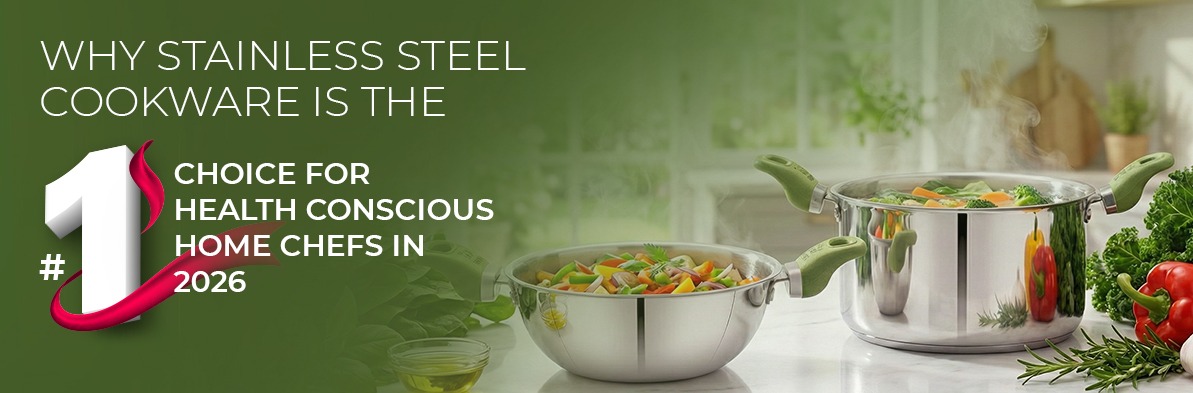
Cookware is not just a kitchen tool. It directly interacts with the food that people consume every day. The type of metal used in cookware, the heat distribution, and the presence of coatings can all influence food safety and nutritional quality.
Why Choosing the Right Kadai Matters for Your Health
Poor-quality cookware may release trace metals when exposed to high heat or acidic ingredients. Similarly, cookware with synthetic coatings may degrade over time if exposed to very high temperatures. These factors make it important to understand which kadai is good for health before choosing cookware for daily cooking.
Heat distribution is another important aspect. When cookware heats unevenly, certain areas become excessively hot and burn food while other areas remain undercooked. Burnt food can produce harmful compounds and affect both flavor and nutrition.
Oil usage is also affected by cookware design. Pans that distribute heat evenly often require moderate oil because food cooks uniformly rather than sticking or burning. Over time, choosing stable cookware materials can reduce exposure to unwanted chemicals and improve long-term cooking safety.
For households that cook daily meals, selecting the right kadai becomes an important decision for maintaining both food quality and overall health.
What is a Triply Kadai?
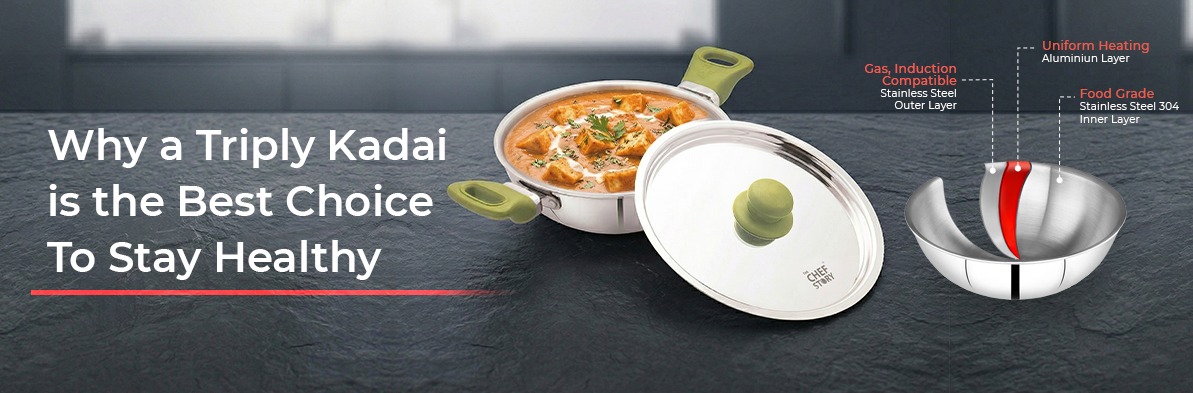
A triply kadai is designed using a three-layer metal construction that improves both cooking performance and safety. Instead of using a single sheet of metal, triply cookware combines multiple layers that work together to distribute heat evenly.
The inner cooking surface is made of food-grade 304 stainless steel. This grade of stainless steel contains chromium and nickel, which provide corrosion resistance and prevent the metal from reacting with food. Because of this stability, stainless steel remains one of the safest surfaces for cooking.
The middle layer consists of an aluminium core. Aluminium is an excellent heat conductor, meaning it spreads heat quickly across the entire base of the cookware. This prevents hot spots and ensures ingredients cook evenly.
The outer layer is also stainless steel, which adds durability and compatibility with different cooking surfaces such as gas and induction.
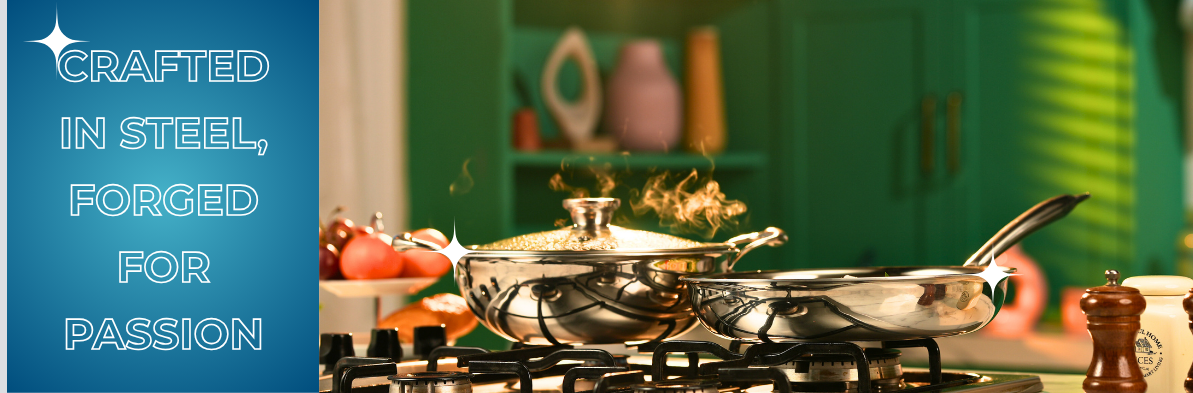
A well-designed example of this construction can be seen in the Triply Stainless Steel Deep Kadai from The Chef Story, where the aluminium core is bonded between layers of stainless steel to improve heat control during everyday cooking.
This layered design allows cooks to enjoy the stability of stainless steel along with improved heat efficiency.
Why Triply Kadai is Good for Health
1. No Harmful Chemical Coating
Triply cookware does not depend on synthetic coatings to create a cooking surface. The food comes into contact directly with stainless steel, which is a stable metal used widely in professional kitchens.
Unlike coated cookware, there is no risk of surface peeling or flaking over time. This makes triply cookware suitable for long-term use without introducing unwanted particles into food.
2. Prevents Metal Leaching
Food-grade stainless steel such as 304 stainless steel is known for its corrosion resistance. The chromium in the alloy forms a protective layer that prevents chemical reactions between the metal and food.
This stability makes triply cookware suitable for cooking acidic dishes such as tomato-based curries or tamarind gravies without altering flavor or safety.
3. Requires Less Oil
Even heat distribution helps ingredients cook consistently across the pan. When food cooks evenly, it releases naturally from the surface instead of sticking.
Cookware such as the Triply Stainless Steel Fry Pan from The Chef Story is designed to maintain stable heat, which allows sautéing vegetables and spices with moderate oil.
4. Even Cooking Prevents Burning
Uneven heating can cause certain areas of a pan to overheat and burn ingredients. The aluminium core in triply cookware spreads heat evenly across the base, reducing this problem.
Even cooking not only improves taste but also prevents the formation of burnt residues that can affect food quality.
5. Suitable for Indian Cooking
Indian cooking techniques often involve high heat and layered spice preparation. Processes such as tempering spices, frying onions, and simmering curries require cookware that can handle strong heat without damage.
Triply cookware supports these cooking methods because it maintains stable temperature while allowing precise heat control.
For example, cookware such as a Triply Stainless Steel Sauce Pan from The Chef Story works well for simmering dals and curries where steady heat is required for flavor development.
Types of Kadai Available in the Market
Different materials are used to manufacture kadais, each with its own characteristics. Understanding these materials helps in selecting cookware that suits both cooking style and health considerations.
Triply Kadai
A triply kadai uses a layered construction that combines stainless steel with an aluminium core. This structure allows the pan to heat evenly while maintaining the stability of stainless steel.
Because it does not rely on chemical coatings, triply cookware remains durable even after years of cooking. Many professional kitchens prefer this type of cookware because it handles high heat and heavy cooking workloads effectively.
Stainless Steel Kadai
A regular stainless steel kadai usually consists of a single layer of steel. It is durable and corrosion resistant, but the absence of an aluminium core may lead to slower and less even heat distribution.
Non-Stick Kadai
Non-stick kadais are designed with a coated cooking surface that reduces sticking. They are convenient for certain dishes but may require careful heat control because very high temperatures can degrade the coating over time.
Cast Iron Kadai
Cast iron cookware retains heat well and is often used for deep frying or slow cooking. However, it is heavier and usually requires seasoning to maintain its surface.
Aluminium Kadai
Aluminium kadais heat quickly and are lightweight. However, untreated aluminium can react with acidic foods, which may affect flavor and long-term durability.
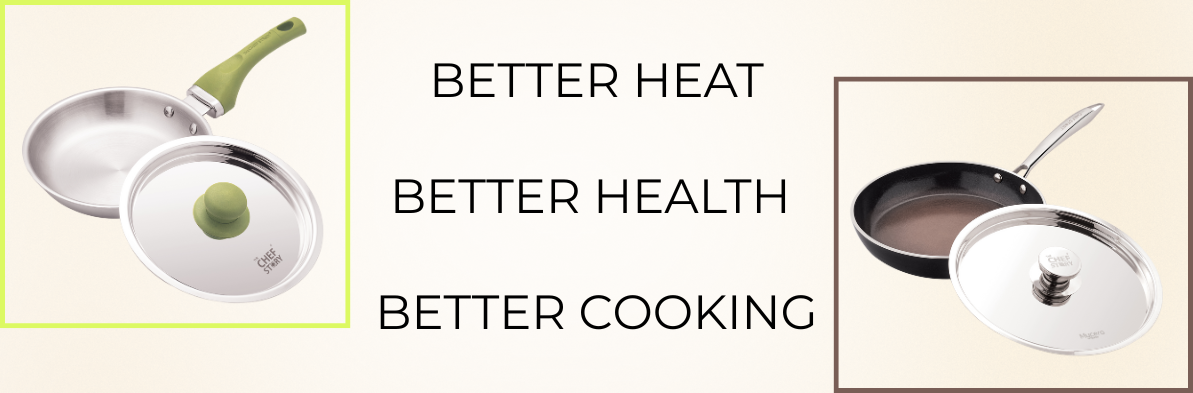
Triply Kadai vs Non-Stick Kadai – Which is Healthier?
| Feature | Triply Kadai | Non-Stick Kadai |
| Chemical-free | Yes | No |
| Durability | High | Medium |
| Safe at High Heat | Yes | No |
| Oil Usage | Moderate | Low |
| Lifespan | Long | Short |
Triply cookware is often considered a healthier long-term option because it does not rely on synthetic coatings and can tolerate higher cooking temperatures. While non-stick cookware reduces sticking with minimal oil, its coating may degrade after extended use.
For long-term kitchen use, many cooks prefer cookware such as the Triply Stainless Steel Deep Kadai from The Chef Story, which maintains performance even under frequent high-heat cooking.
How to Choose the Best Triply Kadai for Your Kitchen
Selecting the right triply kadai involves evaluating several technical factors rather than focusing only on appearance.
Thickness is an important aspect. Cookware with a thickness between 2.5mm and 3mm generally offers better heat stability and durability.
Induction compatibility is also important for modern kitchens. Many triply cookware designs include a magnetic stainless steel base that works with induction cooktops as well as gas stoves.
Handle construction should also be considered. Riveted handles provide stronger support and are less likely to loosen over time when lifting heavy cookware.
Food-grade certification is another key factor. Cookware made with 304 stainless steel ensures that the cooking surface remains stable and resistant to corrosion.
Finally, buyers often compare engineering quality when searching for the best triply kadai in India. Many households today prefer to buy triply kadai online after evaluating construction, thickness, and long-term durability.
Frequently Asked Questions (FAQ)
Is triply kadai safe for daily cooking?
Yes, triply kadai is considered safe for everyday cooking. The stainless steel interior remains stable when exposed to heat, while the aluminium core helps distribute heat evenly during cooking.
Does triply kadai need seasoning?
Triply cookware does not require seasoning. Unlike cast iron, stainless steel surfaces remain stable without forming a seasoned layer.
Can triply kadai be used on induction?
Yes. Most triply cookware uses a magnetic stainless steel exterior layer, which makes it compatible with induction cooktops as well as traditional gas stoves.
Is triply better than stainless steel?
Triply cookware is an improvement over single-layer stainless steel because the aluminium core spreads heat evenly. This reduces hot spots and improves cooking consistency.
Which metal kadai is best for health?
Triply stainless steel cookware is widely considered a safe choice because it uses food-grade stainless steel while providing even heat distribution without chemical coatings.
Conclusion
Choosing the right cookware plays an important role in maintaining healthy cooking practices. The material of the cookware, its heat distribution, and its long-term durability all influence the quality of food prepared in the kitchen.
Triply cookware offers several advantages because it combines the stability of stainless steel with improved heat distribution from an aluminium core. This design allows consistent cooking while avoiding chemical coatings that may degrade over time.
For households that cook regularly, investing in durable cookware such as a well-built triply kadai provides reliable performance for many years. With proper construction and food-grade materials, triply cookware supports safe, efficient, and consistent cooking for everyday meals.