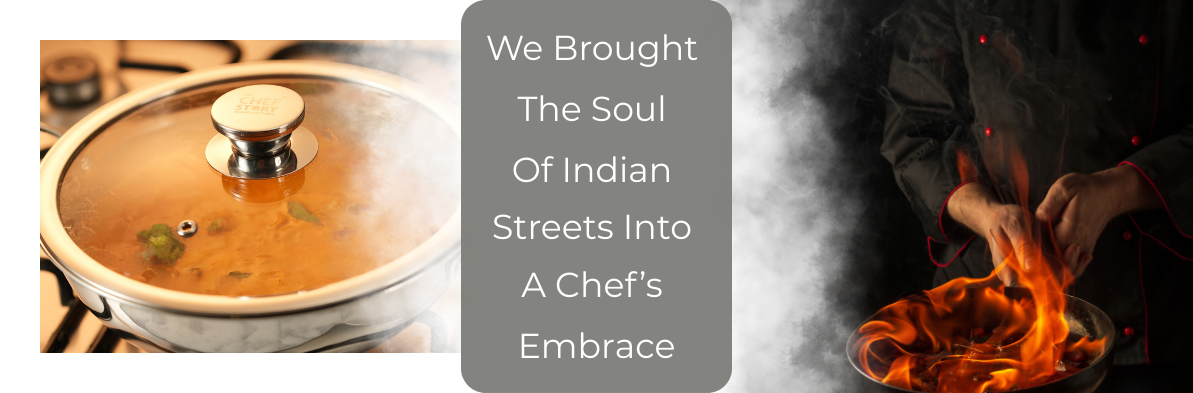
There’s something magical about Indian street food. The sizzling sound of a tawa as it meets a ladle of spicy masala, the aroma of pav bhaji simmering in butter, the crunch of a freshly fried pakora dipped in green chutney it’s food that’s not just eaten, but experienced.
But what if you wanted to bring that same experience home? Street food is usually cooked in heavy-duty iron kadhais and giant tawas that sit over roaring flames. We wanted to see if our own stainless steel cookware could handle the challenge. Could we recreate the same bold flavors and textures at home, with tools designed for everyday cooking? That’s exactly what we set out to find.
For our experiment, we picked three essentials:
- A tri ply stainless steel kadai perfect for deep frying and curries.
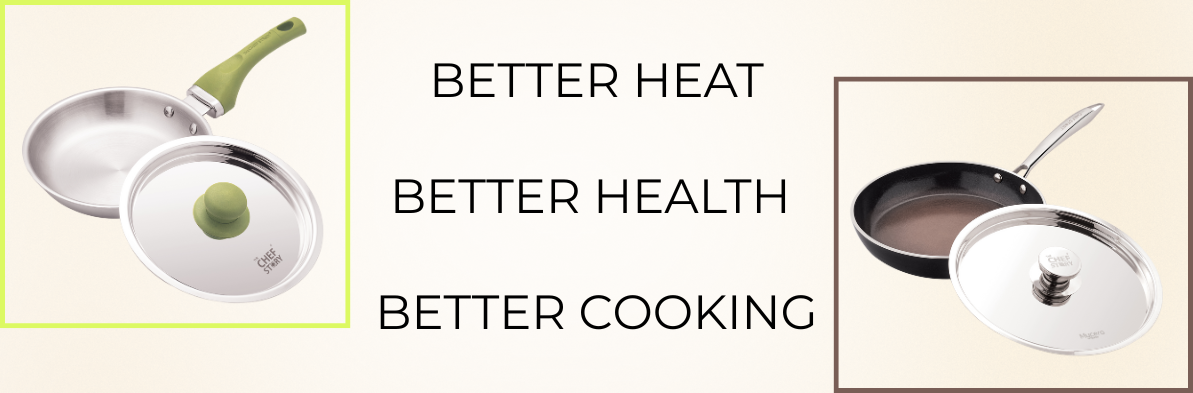
- A stainless steel frying pan to test how well it handles shallow frying and searing.
- A stainless steel casserole with lid ideal for slow cooking and gravies.
All of them are part of our premium stainless steel kitchenware collection, built to distribute heat evenly and retain it longer. If you’ve ever thought about whether stainless steel cookware is good for Indian food, here’s our answer: it’s not just good, it’s reliable, versatile, and safe.
1. Crispy Pakoras Straight from the Kadai
We started with street food classic pakoras. These crispy fritters demand hot, stable oil and a vessel that doesn’t cool down the moment you add a batch. Our stainless steel kadai for deep frying passed the test effortlessly. The oil stayed consistently hot, so each pakora came out evenly browned and crisp without being greasy.
This was a big win, because one of the most common doubts people have when they buy stainless steel cookware online is whether it works well for frying. The answer? Absolutely especially if you choose triply stainless steel cookware designed for deep-frying and high-heat cooking.
2. Pav Bhaji, Slow-Cooked to Perfection
Next came Pav Bhaji, the king of Indian street food. Traditionally, it’s cooked on a massive iron tawa, with vendors smashing the vegetables until they melt into a buttery, spicy mash. At home, we switched to a big stainless steel casserole with a lid.
The wide base gave us enough room to mash the vegetables while the heavy bottom prevented the bhaji from burning. The casserole also retained heat beautifully, so even after we turned off the flame, the bhaji stayed piping hot until serving time. If you’ve ever wondered which casserole cookware is practical for Indian dishes, a stainless steel casserole with a lid is one of the best options.
3. Paneer and Pulao on the Frying Pan
A street food blog is incomplete without talking about the tawa. From tawa pulao to paneer tikka, this flat pan is central to the street-side experience. We used our stainless steel frying pan in place of the giant street tawa. To our delight, it gave a lovely sear to the paneer cubes while keeping the spices intact, and the rice for tawa pulao came together perfectly without sticking.
This was also where the versatility of stainless steel cookware really stood out. Unlike coated pans, a stainless steel frying pan can move straight from stove to table. It’s durable enough for high heat and stylish enough to serve directly.
4. Chaat, the Final Showstopper
Finally, we tried aloo tikki chaat. The tikki needed a golden crust that could hold up under layers of chutney, yogurt, and sev. Our tri ply frying pan delivered exactly that. The even heat distribution ensured every tikki cooked through without breaking apart. Paired with fresh toppings, it tasted like the streets of Delhi in the comfort of our kitchen.
Why Stainless Steel Worked So Well
Cooking street food at home can sometimes feel intimidating, but having the right cookware changes everything. Stainless steel isn’t just durable; it’s also non-reactive, making it safer for cooking spicy, tangy, tomato-based gravies like pav bhaji or chole. Unlike cheap aluminum pans, surgical stainless steel cookware doesn’t leach into food, which makes it a healthier choice for everyday Indian cooking.
Another advantage? Maintenance. Once you know the basics of cleaning stainless steel soaking, scrubbing gently, and avoiding harsh abrasives your cookware looks as good as new. And unlike non-stick coatings that wear out over time, good stainless steel cookware is built to last for years.