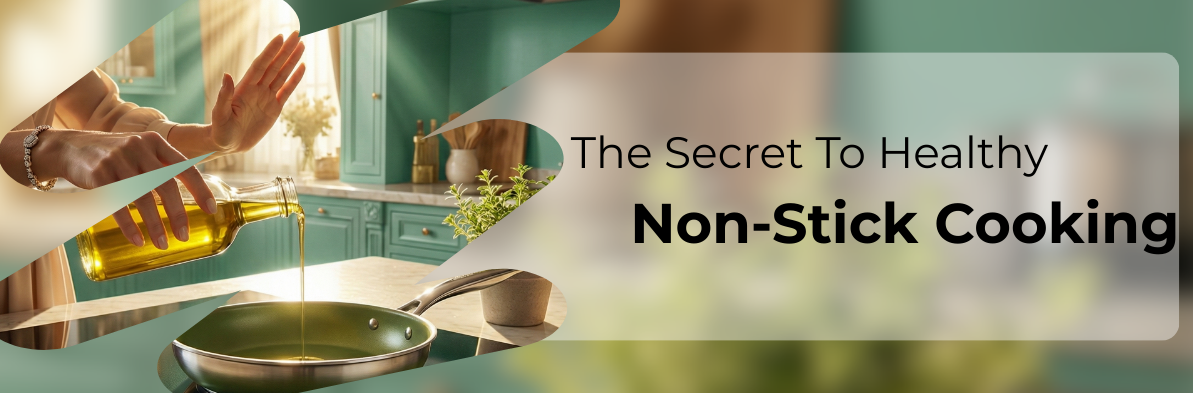
Most of us want lighter meals without losing taste. That usually starts with learning how to cook with less oil. It sounds difficult at first, especially when using stainless steel cookware or ceramic cookware, but the technique matters more than the amount of oil.
When the pan heats correctly and the ingredients reach it at the right moment, the food behaves differently. You don’t need a non-stick coating to get smooth results. With the right habits, reducing oil use on stainless steel pans becomes natural, and ceramic pans help even more.
Why Reducing Oil Matters for Health
Oil adds flavour, yet it adds more calories than most people realise. One tablespoon has around 120 calories, and that small amount adds up quickly when used daily. Lowering oil can support heart health and reduce heavy meals that feel tiring.
Most modern kitchens now prefer clean flavours that come from the ingredients rather than the grease. More flavour, less grease. It is a simple idea, but it changes the way meals feel on the plate. Healthy cooking pans make this easier because they respond better to controlled heat and careful cooking.
The Science of ‘Sticking’ in Cookware
Sticking usually happens when either the heat is off or the surface is dry. Stainless steel needs time to warm up so the metal expands evenly. Once that happens, food releases far better. Ceramic pans are smoother, but even they need moderate heat to work properly. Ingredients with natural sugars, like onions or tomatoes, cling more when added too early.
Sometimes the problem is not the pan but the timing. When heat stabilises and moisture is balanced, food lifts cleanly from both surfaces.
How to Cook with Less Oil on Stainless Steel Pans
Start with heat. Stainless steel cookware performs best when warmed slowly. Place the pan on medium flame and give it a minute or two. Add a few drops of water to check readiness. If the droplets glide around instead of evaporating instantly, the pan is ready. Add the ingredients only after the pan settles into that temperature.
This single step prevents most sticking issues. Keep the flame medium because high heat causes burning rather than browning. With practice, stainless steel becomes one of the best tools for oil-free cooking tips, even for beginners.
Pro Tip: The Chef Story’s stainless steel pans spread heat evenly which supports oil-free cooking without needing a coating.
How to Cook with Less Oil on Ceramic Pans
Ceramic cookware is easier for low-oil cooking because the surface is smooth from the start. It still needs gentle heat. If you begin with a high flame, food may stick or dry out. Warm the pan on low flame, then move to medium.
This pattern helps vegetables soften without extra oil. For sautéing onions or garlic, a spoon of water works as the first step. Once the ingredients soften, the rest of the process feels simple. Non-stick ceramic cookware performs well when handled with steady heat and proper cleaning.
Healthy Cooking Techniques to Reduce Oil
Some habits make a noticeable difference. Steam vegetables before stir-frying them so they need less grease. Start dishes with a splash of water instead of oil, especially when softening aromatics. Spread food evenly across the pan to avoid sudden burning.
Keep the flame lower than usual because cookware holds heat longer than expected. Use lids often since steam prevents sticking. These small changes reduce oil without changing your cooking style.
Choosing the Right Cookware for Low-Oil Cooking
The right cookware helps you rely less on oil. Stainless steel cookware works well for boiling, sautéing, and foods that need quick heat adjustments. Ceramic pans help with low-oil cooking because they hold medium heat well and have a smooth surface.
Cast iron gives strong heat and builds a natural release surface over time when seasoned well. Healthy cookware brands in India usually focus on safe materials that support low-oil recipes. Choosing stable materials helps you cook with confidence.
Common Mistakes When Cooking Without Oil
The biggest mistake is rushing the heat. Many people cook on high flame and expect food to release easily. Stainless steel needs patience at the start. Ceramic pans lose their coating quality when overheated. Another issue is adding food straight from the fridge onto a hot surface. The sudden temperature change causes sticking.
Some people also crowd the pan which traps steam and affects texture. Small mistakes like these make oil-free cooking feel harder than it really is.
Quick FAQ Section
Q1: Can you really cook without oil on stainless steel pans
Yes, if you preheat correctly and maintain a steady temperature.
Q2: Which is better for low-oil cooking, stainless steel or ceramic
Both work. Stainless steel handles high heat better, while ceramic cookware supports gentler, low-oil cooking.
Q3: How to make food not stick without using non-stick pans
Preheat the pan, control the flame, and add ingredients when the pan is ready.
Q4: Are ceramic pans safe for daily use
Good ceramic cookware is considered safe because the surface remains stable under moderate heat.
Q5: What is the healthiest cookware material
Stainless steel, ceramic, and cast iron are generally viewed as safe cookware materials.
Conclusion
Cooking with less oil becomes easier once you understand how heat interacts with different materials. Stainless steel and ceramic cookware respond well when used correctly and help create lighter meals without losing taste.
You do not need to remove all oil. You only need control and the right technique. Healthy cooking pans make this process more comfortable. If you want to begin your low-oil journey with durable tools, The Chef Story cookware offers pieces crafted for Indian kitchens. You can explore the stainless steel, cast iron, and ceramic collections to find pans that suit your cooking habits.