Mahashivratri is just around the corner, and if you’re planning to observe the fast, you’re probably thinking about what to cook. Let me tell you something – fasting doesn’t mean you have to eat boring food. With the right recipes and proper cookware, your vrat ka khana can be just as delicious and satisfying as your regular meals.
With years of experience in traditional Indian cooking, this collection brings together tried-and-tested Mahashivratri recipes that help one stay energised throughout the day while following all fasting guidelines.
A] Understanding Mahashivratri Fasting Rules
Before we jump into recipes, let’s understand what you can and cannot eat during this fast. This is important because one wrong ingredient can break your fast.
What you CAN eat:
- Sabudana (sago)
- Potatoes
- Sweet potatoes
- Raw bananas
- All kinds of fruits
- Milk and milk products
- Singhara atta (water chestnut flour)
- Kuttu ka atta (buckwheat flour)
- Sama ke chawal (barnyard millet)
- Rock salt (sendha namak)
- Peanuts
- Makhana (fox nuts)
What you CANNOT eat:
- Regular table salt
- Onion and garlic
- Grains like wheat, rice
- Regular flour
- Turmeric
- All pulses and lentils
Now that we’re clear on this, let’s start cooking!
B] Simple Recipes That Will Get You Through the Fast
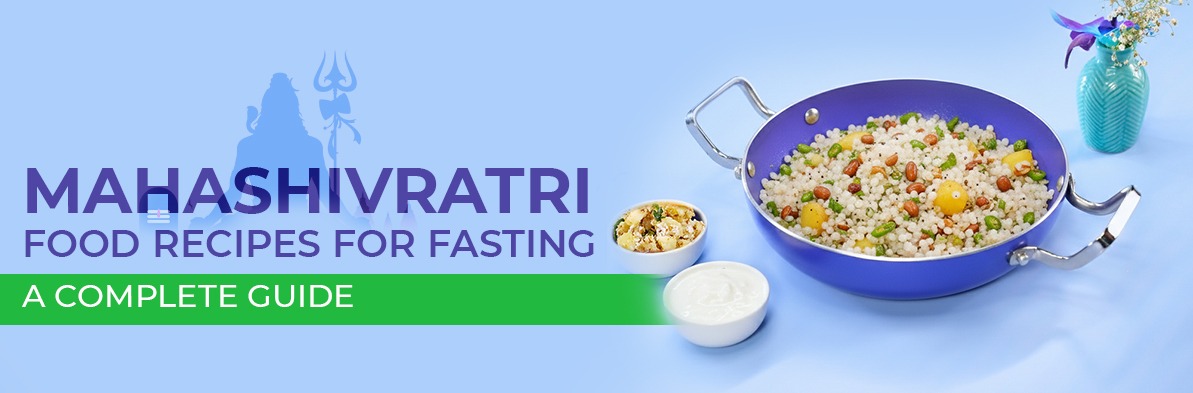
Recipe 1: Sabudana Khichdi
This is probably the most popular fasting recipe, and for good reason. It’s filling, tasty, and gives you instant energy.
What you need:
- 1 cup sabudana
- 2 medium potatoes
- 1/2 cup roasted peanuts (coarsely crushed)
- 2-3 green chilies
- Sendha namak (rock salt) to taste
- 1 teaspoon cumin seeds
- Fresh coriander leaves
- 2 tablespoons ghee
- Juice of half a lemon
How to make it:
First, soak the sabudana in water for 4-5 hours. This step is crucial – if you don’t soak it properly, your khichdi will turn mushy. After soaking, drain all the water completely and let it sit for 30 minutes.
Boil and cube the potatoes. Heat ghee in your pan – and here’s a tip, use a good quality non-toxic pan because it distributes heat evenly and nothing sticks to it. Add cumin seeds, let them crackle. Add green chilies, then the potatoes. Fry for 2 minutes.
Now add the sabudana, peanuts, and salt. Mix everything gently. Cook on low heat for 5-7 minutes, stirring occasionally. The sabudana should turn translucent and soft. Add lemon juice, garnish with coriander, and serve hot.
Common mistakes to avoid:
- Don’t oversoak sabudana – it becomes too soft
- Don’t cook on high heat – the sabudana will stick
- Don’t skip the peanuts – they add the crunch and protein
Recipe 2: Kuttu Ka Dosa
Who said you can’t have dosa while fasting? This buckwheat dosa is crispy, healthy, and perfect for breakfast or dinner.
What you need:
- 1 cup kuttu ka atta
- 1/2 cup sama ke chawal (soaked for 4 hours)
- 1 boiled potato
- 1 green chili
- Sendha namak to taste
- Water as needed
- Ghee for cooking
How to make it:
Grind the soaked sama ke chawal with green chili and a little water to make a smooth paste. In a bowl, mix kuttu ka atta, the ground paste, mashed potato, and salt. Add water slowly to make a medium-thick batter. The consistency should be like regular dosa batter.
Let it rest for 15-20 minutes. Heat your pan, spread a little ghee. Pour a ladleful of batter and spread it in a circular motion. Cook on medium heat. Drizzle some ghee around the edges. Flip and cook the other side until golden brown.
Serve hot with vrat wala raita or green chutney made with coriander, green chili, and lemon juice.
Recipe 3: Makhana Kheer
After two savory dishes, let’s talk about something sweet. This makhana kheer is not just for fasting – it’s so good that you’ll want to make it on regular days too.
What you need:
- 2 cups makhana (fox nuts)
- 1 liter full-fat milk
- 4-5 tablespoons sugar (adjust to taste)
- 4-5 cardamom pods (crushed)
- 10-12 almonds (sliced)
- 10-12 cashews (broken)
- A pinch of saffron
- 2 tablespoons ghee
How to make it:
Roast makhana in ghee until crispy. Keep aside. In the same pan, add a little more ghee and fry the nuts until golden. Remove and keep aside.
Boil the milk in a heavy-bottomed pan. While the milk is boiling, crush half of the roasted makhana coarsely – leave the rest whole. When the milk comes to a boil, reduce heat and let it simmer for 10 minutes.
Add the crushed and whole makhana. Cook for another 10-15 minutes, stirring occasionally. The kheer will start to thicken. Add sugar, cardamom, saffron, and half of the fried nuts. Cook for 5 more minutes.
Turn off the heat. Garnish with remaining nuts. You can serve it hot or cold – both ways it tastes amazing.
Recipe 4: Aloo Jeera (Fasting Style)
Sometimes you just want simple, comforting food. This jeera aloo hits the spot every time.
What you need:
- 4 medium potatoes (boiled and cubed)
- 1 teaspoon cumin seeds
- 2 green chilies (slit)
- Sendha namak to taste
- Red chili powder (if you have vrat wala)
- Fresh coriander leaves
- 2 tablespoons ghee
- Juice of half a lemon
How to make it:
Heat ghee in your pan. Add cumin seeds and green chilies. Once the cumin crackles, add the boiled potato cubes. Add salt and chili powder. Mix well and let it cook for 5-7 minutes on medium heat until the potatoes get a nice golden color on all sides.
Squeeze lemon juice, add fresh coriander, mix, and serve hot.
Tips for Successful Fasting Cooking
Let me share some practical tips that will make your fasting day easier:
- Prep in advance: Soak your sabudana and sama early in the morning. Boil potatoes ahead of time. This saves so much effort later.
- Use the right cookware: This is something I can’t stress enough. Good quality, non-toxic pans make a huge difference. Food cooks evenly, doesn’t stick, and you use less oil. At The Chef Story, we focus on this because we know how important it is for healthy cooking.
- Keep portions balanced: Just because you’re fasting doesn’t mean you should overeat vrat ka khana. Eat moderate portions every 3-4 hours.
- Stay hydrated: Drink plenty of water, coconut water, or fresh fruit juice throughout the day.
- Don’t skip fruits: Keep cut fruits ready in your fridge. They’re the easiest snack and keep you energized.
Conclusion
Cooking for Mahashivratri doesn’t have to be stressful. With these simple recipes and a little planning, you can prepare delicious food that keeps you satisfied throughout your fast. Remember, the key is to use fresh ingredients, cook with good quality cookware, and most importantly, cook with devotion.
Try these recipes for Mahashivratri and let me know which one becomes your favorite. And if you have any traditional family recipes, I’d love to hear about them!
Happy Mahashivratri! May Lord Shiva bless you and your family.
At The Chef Story, we believe that healthy cooking starts with healthy cookware. Our range of non-toxic cookware is designed to make your cooking experience better, safer, and more enjoyable – whether you’re cooking for festivals or everyday meals.