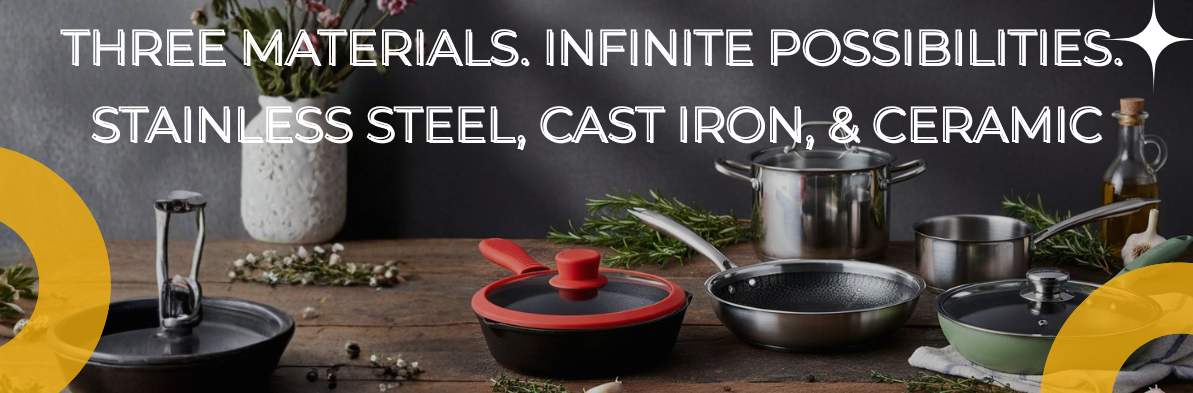
A kitchen feels complete when the cookware works well for everyday use. Many people search for the best cookware combination because they want fewer pieces that can still handle Indian cooking comfortably. The right materials make a big difference in taste, heat control, and long-term value. Stainless steel, cast iron, and ceramic cookware are three safe cookware materials that cover almost all cooking needs without collecting too many utensils.
When chosen wisely, this versatile cookware set supports boiling, frying, sautéing, baking, and slow cooking with steady results. These materials also help home cooks build a minimal cookware set without compromising performance.
Understanding the Core Materials
a. Stainless Steel Cookware
Stainless steel cookware is known for strength and stability. It handles high heat, works on all cooktops, and does not react with food. These benefits make stainless steel pots and pans dependable for Indian sabzis, dals, and rice dishes.
Many users compare stainless steel vs non stick, but the main advantage of steel is its long life and clean cooking surface. A good set resists dents, rust, and scratches even with daily use. The only drawback is that beginners may need a little practice to manage sticking, but proper preheating usually solves that problem.
b. Cast Iron Cookware
Cast iron cookware has been used for generations because it holds heat extremely well. It cooks vegetables evenly and gives excellent browning to foods that need firm heat. A best cast iron skillet can replace many other pans when seasoned correctly. Seasoning creates a natural release layer that gets better over time.
The drawback is the weight, which can feel heavy for some users. With regular care and correct cleaning, cast iron cookware advantages become very clear, especially for rotis, stir-fries, and recipes that need steady heat.
c. Ceramic Cookware
Ceramic cookware is ideal for clean and gentle cooking. It heats evenly on medium flame and supports oil-free or low-oil recipes. Many families prefer a ceramic cookware set because it has a non-toxic cooking surface.
The smooth finish helps prevent sticking when preheated properly. It is great for sautéing vegetables, simmering gravies, and heating leftovers. While ceramic is not suited for high flame, it performs well for most everyday cooking tasks. When handled with care, it remains one of the best ceramic cookware options for a modern kitchen.
How To Build A Versatile Cookware Set
Step 1: Identify Your Cooking Style
Every home cooks differently, so start by observing what actually happens in your kitchen each week. Note how often you boil, shallow fry, sauté, or make rotis. If your family eats dal, sabzi, and rice daily, you need cookware that handles heat well and manages long cooking cycles. Homes that cook heavy dishes like chole, kadai paneer, or biryani should prioritise cookware that stays steady on high flame.
If you prefer lighter meals or low-oil cooking, ceramic cookware becomes very helpful. Beginners may want tools that clean easily and work with simple steps. This small analysis helps narrow down your choices and prevents buying cookware that sits unused in a cabinet.
Step 2: Choose Must-Have Pieces
Once you understand your routine, choose the pieces that cover most of your cooking tasks. A stainless steel saucepan or kadai is useful for boiling milk, preparing gravies, making tea, or cooking dals. It works well on gas and induction, which makes it convenient for different kitchens. A cast iron skillet or dosa tawa handles high heat and is ideal for rotis, parathas, cutlets, paneer tikka, or stir-fried vegetables.
The strong heat helps food brown evenly and adds a richer flavour. A ceramic frying pan or casserole is helpful for foods that need gentle cooking like mixed vegetables, pasta, khichdi, or low-oil recipes. These essential kitchen pots and pans allow you to handle almost every task without needing a large collection.
Step 3: Balance Quality and Quantity
The key to a practical cookware set is choosing a few pieces that do more than one job. Instead of filling your kitchen with many pans, look for multi-purpose cookware that supports Indian cooking. A stainless steel kadai can boil, sauté, shallow fry, or prepare curries. A cast iron tawa can make rotis, crisp dosas, toasted sandwiches, and sear vegetables.
A ceramic pan can cook, reheat, and serve from the same dish. This reduces clutter and keeps the kitchen organised. A smaller, well-chosen collection also saves money because good cookware lasts longer and works better over the years.
Combining Materials for Maximum Versatility
a. When to Use Each Type in Daily Cooking
Stainless steel works well for boiling, sautéing, and cooking dishes that need frequent stirring. It stays stable on medium to high flame and manages tough ingredients without staining. Cast iron is ideal when recipes need firm, even heat.
It is perfect for rotis, crisp vegetables, browning paneer, and long-cooked items. Ceramic cookware supports gentle cooking on medium flame and is suitable for fresh vegetables, gravies, and foods that need light handling.
b. Mixing Materials Safely and Efficiently
Each material offers different strengths, so combining them creates a balanced setup. Use stainless steel for boiling and frying, cast iron for browning and deep flavour, and ceramic for low-oil cooking and quick meals.
This combination handles Indian-style cooking without extra tools. It also helps distribute workload between utensils so none of them wear out early.
c. Example Combinations
→ Stainless steel sauce pan + cast iron tawa + ceramic deep kadhai
→ Stainless steel kadai + cast iron skillet + ceramic casserole
→ Stainless steel saucepan + cast iron concave tawa + ceramic frying pan
These combinations create a versatile kitchen setup that supports almost every daily recipe. They deliver the best cookware set combination for homes looking for performance and long-term value.
Maintenance and Longevity Tips
Every cookware material needs different care, but the basics stay simple. Stainless steel needs regular cleaning with mild soap, and removing stains with warm water and baking soda helps maintain shine. Cast iron requires seasoning after cleaning and proper drying to prevent rust.
Ceramic cookware stays stable when cleaned with a soft scrubber and stored without stacking heavy items on it. These cookware care tips extend cookware life and keep your set working smoothly. Proper maintenance also prevents damage and avoids frequent replacements.
The Chef Story Recommendations
The Chef Story cookware collection includes pieces designed for everyday Indian cooking. The Haptik Stainless Steel Cookware range offers strong build quality and even heating.
The Tri-Geo Stainless Steel Range supports fast and steady heat distribution using a multi-layer structure. The Cast Iron Cookware range is seasoned for stability and long-term use. The Ceramic Cookware series is suitable for low-oil cooking with a smooth and safe cooking surface.
These collections help users build a cookware set India trusts for everyday meals. Each range provides durable and safe cookware materials for modern kitchens.
Frequently Asked Questions
1. Is stainless steel better than ceramic cookware?
Both materials work well, but the usage depends on the recipe. Stainless steel handles high heat and boiling better, while ceramic cookware is suited for low-oil cooking and medium flame.
2. Can I cook everything in cast iron?
Most items cook well in cast iron, especially dishes that need firm heat. It holds heat for long periods and works best for rotis, searing, and slow cooking.
3. What are the safest cookware materials?
Stainless steel, cast iron, and ceramic cookware are considered safe cookware materials. They do not release harmful compounds and remain stable during cooking.
4. How many pieces do I need for a basic cookware set?
A basic versatile cookware set usually includes three items. One stainless steel kadai or saucepan, one cast iron tawa or skillet, and one ceramic pan or casserole. This covers boiling, frying, sautéing, and low-oil cooking.
Conclusion
A smart cookware set focuses on fewer pieces that cover more tasks. Stainless steel, cast iron, and ceramic cookware give home cooks everything they need for Indian meals. These materials work safely, last long, and adapt to different cooking styles.
By choosing the right combination, any home can build a practical setup without collecting unnecessary pieces. This trio supports boiling, frying, slow cooking, and low-oil meals with ease. For families wanting reliable and long-lasting tools, The Chef Story cookware provides strong options that match the needs of Indian kitchens.