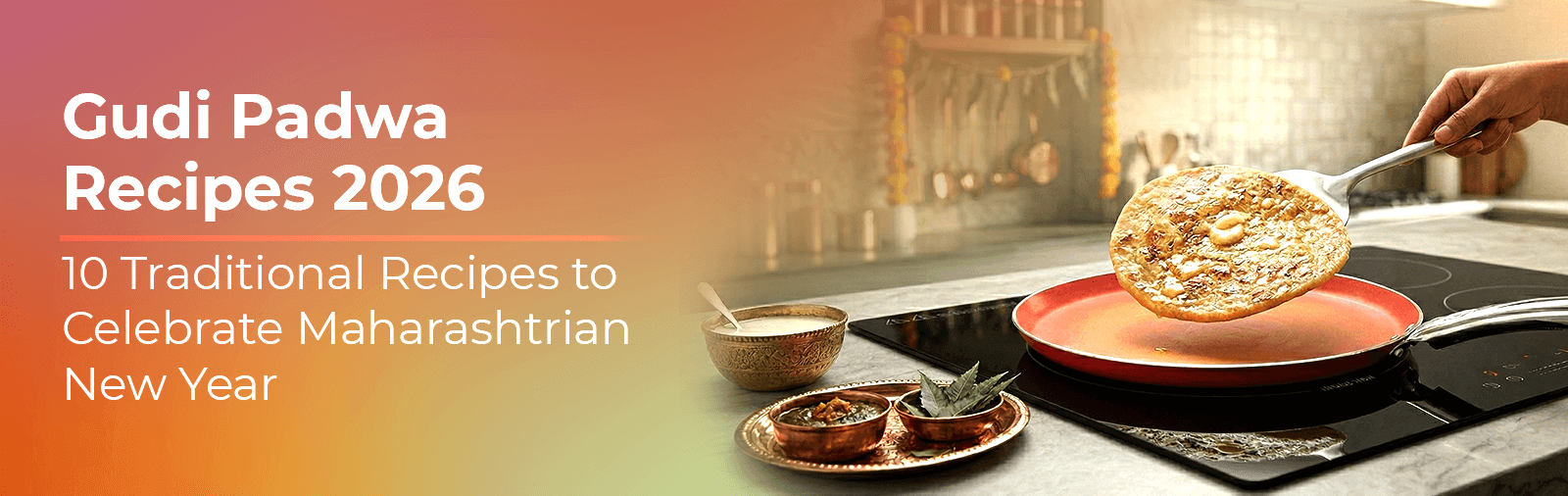
For Maharashtrians and those from states nearby, the Gudi Padwa festival signifies the start of the new year. The festival usually falls in March or April and symbolizes a fresh start, prosperity, and gratitude. Homes are decorated with rangoli, the gudi flag is raised outside the house, and families gather to share festive meals.
Food plays a central role in Gudi Padwa recipes because the dishes reflect balance in life. Sweet preparations represent happiness, while bitter ingredients such as neem symbolize challenges that must be accepted. The festive plate usually includes sweets, light curries, snacks, and seasonal dishes.
Cooking these meals properly requires patience and steady heat. Many traditional cooks prefer cookware that distributes heat evenly during roasting, frying, or simmering. Using a well-balanced stainless steel pan, ceramic cookware, or a cast iron tawa helps maintain stable cooking temperatures, which improves flavor and texture.
Gudi Padwa Recipes 2026 – Why These 10 Recipes Are Special
Traditional Maharashtrian New Year recipes are designed to create a balanced festive meal. Instead of preparing many random dishes, families cook a few meaningful recipes that represent culture, seasonality, and nutrition.
Sweet dishes like puran poli or shrikhand welcome the new year with positivity. Savory dishes such as batata bhaji and katachi amti balance the sweetness and make the meal complete. Snacks like kothimbir vadi add texture and variety to the festive spread.
Many of these recipes involve techniques like slow roasting, gentle simmering, or deep frying. For example, frying puris requires stable oil temperature, while roasting puran poli needs steady heat across the pan. Using cookware with even heat distribution makes these steps easier and helps maintain traditional flavors.
1. Puran Poli
Puran Poli is one of the most iconic Gudi Padwa sweets prepared in Maharashtrian homes. The dish combines soft wheat flatbread with a sweet filling made from chana dal, jaggery, cardamom, and nutmeg.
Start by cooking chana dal until it becomes soft but not mushy. Drain the water and cook the dal again with jaggery until the mixture thickens. A stainless steel saucepan helps distribute heat evenly while reducing the filling, preventing jaggery from burning.
Prepare a soft wheat dough and stuff it with the sweet filling. Roll the dough gently into thin discs.
Roast the poli slowly on a cast iron tawa or ceramic flat tawa. These surfaces maintain steady heat and help create even golden spots. Serve hot with ghee or warm milk.
2. Shrikhand
Shrikhand is a cooling dessert often served with puri during the Gudi Padwa meal. The dish uses thick strained yogurt flavored with saffron, cardamom, and sugar.
Begin by hanging fresh yogurt in cloth for several hours so that the whey drains completely. The remaining thick yogurt becomes the base of shrikhand.
Mix sugar, saffron milk, and cardamom into the yogurt slowly. If warming saffron milk, use a ceramic deep kadhai to heat gently without scorching.
Chill the mixture before serving. Garnish with almonds or pistachios for texture. The creamy sweetness of Kesar Shrikhand pairs beautifully with hot puris.
3. Neem & Jaggery Mixture (Kadu-Neem Prasad)
The first food eaten on Gudi Padwa morning is often the neem and jaggery mixture. This preparation represents the balance between bitterness and sweetness in life.
Fresh neem leaves are finely chopped and mixed with grated jaggery. Tamarind pulp, cumin powder, and pepper are sometimes added for flavor.
Some cooks lightly roast cumin seeds before mixing them with the prasad. A ceramic wok works well for dry roasting spices because it prevents scorching.
This mixture is served in small portions before the main meal begins.
4. Batata Bhaji
Batata Bhaji is a simple Maharashtrian potato sabzi served with puri and shrikhand. The dish uses boiled potatoes cooked with mustard seeds, curry leaves, turmeric, and green chilies.
Start by heating oil and adding mustard seeds until they crackle. Then add curry leaves, green chilies, and turmeric.
Cooking this tempering in a deep stainless steel kadhai allows the spices to bloom evenly without burning. Add boiled potatoes and mix gently so the pieces remain intact.
Finish the dish with fresh coriander and a squeeze of lemon juice. Serve warm alongside puris.
5. Poori
Poori is one of the most common accompaniments in traditional Gudi Padwa food. When served hot with batata bhaji and shrikhand, it completes the festive plate. The dough is simple but requires proper texture. Mix wheat flour with salt and a small amount of oil, then knead into a firm dough using minimal water.
Allow the dough to rest for about ten minutes. Divide it into small portions and roll each piece into thick discs. Pooris should not be rolled too thin, otherwise they will not puff while frying.
Heat oil slowly in a deep stainless steel kadhai before frying. Once the oil is hot, slide the poori gently into the oil and press lightly with a slotted spoon. This helps the poori puff quickly. Maintaining a steady oil temperature is important, because very hot oil can burn the poori while cooler oil makes it absorb excess oil.
Fry until golden and serve immediately. Fresh puris always taste best when eaten straight from the pan.
6. Katachi Amti
Katachi Amti is a traditional Maharashtrian amti recipe prepared using the water left after cooking chana dal for puran poli. Instead of discarding this broth, it is transformed into a flavorful curry that perfectly balances the sweet poli.
Begin by heating a little oil and preparing a tempering with mustard seeds, curry leaves, garlic, and hing. Once fragrant, add the dal broth along with tamarind pulp, jaggery, and goda masala. The mixture should simmer gently so the flavors develop slowly.
Cooking this curry in a tri-ply stainless steel saucepan helps maintain even heat during simmering. Slow cooking prevents the spices from becoming harsh and allows the sweet and tangy notes to balance naturally.
Katachi Amti is usually served warm with steamed rice and a drizzle of ghee. The thin, spicy broth complements the sweetness of puran poli beautifully.
7. Kothimbir Vadi
Kothimbir Vadi is a classic Maharashtrian snack prepared using fresh coriander leaves and gram flour. The dish is known for its strong coriander aroma and slightly crisp outer layer.
Start by mixing finely chopped coriander with gram flour, ginger, green chilies, turmeric, and spices. Add water gradually to form a thick batter. This mixture is then cooked slowly while stirring until it becomes dense and begins to leave the sides of the pan.
Once thick, spread the mixture evenly in a tray and allow it to cool completely. After cooling, cut it into small squares or diamond shapes.
These pieces are usually shallow fried to create a crisp crust. Using a honeycomb fry pan allows the pieces to brown evenly with very little oil. Fry gently until the outside becomes golden and slightly crisp.
Serve hot with green chutney or dry garlic chutney for a traditional flavor combination.
8. Sabudana Khichdi
Sabudana Khichdi is one of the most familiar vrat recipes for Gudi Padwa and other fasting days. The key to good khichdi is properly soaked sabudana that cooks without becoming sticky.
Soak sabudana pearls for several hours until they soften but remain separate. Before cooking, mix them with roasted peanut powder and salt. This helps prevent clumping during cooking.
Heat ghee or oil and add cumin seeds, green chilies, and diced potatoes. Once the potatoes cook partially, add the soaked sabudana and mix gently. Cooking on medium heat is important because high heat can cause the pearls to stick together.
A ceramic kadhai works well here because sabudana tends to stick to very hot metal surfaces. Stir lightly until the pearls turn translucent.
Finish with lemon juice and fresh coriander. Serve immediately while the khichdi remains soft and fluffy.
9. Aamras (Seasonal Special)
Aamras is a refreshing seasonal dish often served during the Maharashtrian New Year meal when mangoes begin appearing in markets. It is simple to prepare but depends heavily on the quality of mangoes.
Choose ripe, naturally sweet mangoes and extract the pulp. Blend the pulp gently until smooth. Some families add a small amount of sugar if the mangoes are not very sweet, while others prefer the natural flavor.
For a slightly richer texture, a little milk or cream can be mixed with the pulp. If milk is used, warm it lightly before blending so that it combines smoothly with the mango.
Chill the aamras before serving. It is traditionally eaten with hot puris, creating a balance between warm and cool flavors.
10. Modak
Modak is a beloved festival sweet in Maharashtrian cuisine and is also associated with many religious celebrations. The traditional version is steamed and filled with a sweet coconut mixture.
Begin by preparing the filling using grated coconut and jaggery. Cook the mixture slowly until the jaggery melts and the coconut absorbs the sweetness. Cardamom adds fragrance to the filling.
Cooking this mixture in a stainless steel saucepan helps distribute heat evenly and prevents jaggery from sticking at the base.
For the outer covering, prepare a soft dough using rice flour and warm water. Small portions of dough are shaped into cups, filled with the coconut mixture, and sealed carefully at the top.
Steam the modaks until the outer layer becomes soft and slightly glossy. Serve warm with a drizzle of ghee for a traditional finish.
FAQs
What is the main dish of Gudi Padwa?
The main dish of Gudi Padwa is Puran Poli, a sweet flatbread made from chana dal and jaggery. It is usually served with katachi amti and ghee.
What sweets are made on Gudi Padwa?
Common sweets prepared for Gudi Padwa include Puran Poli, Shrikhand, Modak, and Kesar Shrikhand.
Why do people eat neem on Gudi Padwa?
Neem is eaten with jaggery to symbolize the balance of life. The bitter and sweet flavors represent challenges and happiness in the coming year.
Is Gudi Padwa a public holiday in Maharashtra?
Yes. Gudi Padwa is widely celebrated in Maharashtra and is recognized as a public holiday in the state.