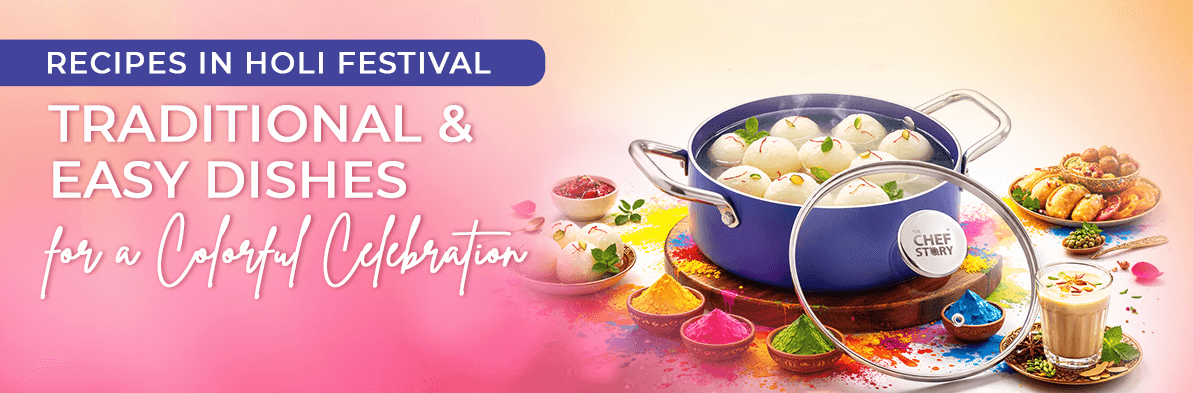
Holi is not only about colors. It is also about the table filled with festive food that brings people together. Families begin preparing traditional Holi dishes days in advance. From rich sweets to crispy snacks and cooling drinks, every region has its own favorites. Searching for the best Recipes in Holi Festival often leads to repetitive lists without clear cooking guidance. This guide focuses on practical methods, ingredient balance, and preparation tips that make cooking easier and more predictable. These Holi special recipes include sweets, snacks, and drinks that suit both large gatherings and small family celebrations. Whether planning a full festive spread or simple Holi festival food ideas, this resource offers structured help for a colorful and satisfying celebration.
30 Recipes for Holi Festival 2026
1. Gujiya Recipe (Mawa / Khoya Gujiya)
Gujiya remains one of the most loved traditional Holi dishes. The outer layer should be firm yet crisp, prepared using maida and a small amount of ghee rubbed into the dough. The filling combines khoya, powdered sugar, chopped nuts, and cardamom. Roasting the khoya lightly removes excess moisture and improves flavor. Seal edges properly to prevent filling leakage while frying. Fry on medium heat for even golden color. Allow gujiyas to cool before storing. They stay fresh for several days when kept airtight. For variation, dip fried gujiyas in light sugar syrup. Serve at room temperature with thandai. Proper sealing and controlled frying are key for perfect texture.
2. Malpua Recipe
Malpua is a soft, syrup-soaked sweet prepared in many North Indian homes during Holi. The batter is made using flour, semolina, milk, and fennel seeds. Resting the batter improves texture. Fry small portions in shallow ghee until edges turn crisp. A Haptik frying pan provides even heat distribution while shallow-frying malpuas to golden perfection. The center should remain soft. Immediately dip each malpua into warm sugar syrup flavored with cardamom or saffron. Do not soak too long, or they become soggy. Malpua pairs well with rabri for a richer taste. This sweet balances crisp edges and soft centers. Controlled flame ensures even cooking without burning.
3. Thandai Barfi
Thandai barfi combines the flavors of Holi’s signature drink into a solid sweet. Grind almonds, pistachios, melon seeds, fennel, and pepper into a fine paste. For best blending results with minimal sticking, tools like a MyCera ceramic fry pan help stir mixtures gently without adding much fat. Cook with condensed milk or khoya until thick. Add saffron soaked in warm milk. Stir continuously to avoid sticking. Spread mixture evenly in a greased tray and allow it to set. Cut into squares after cooling. Thandai barfi works well for gifting. It captures festive flavor in a convenient form. Store in the refrigerator for a longer shelf life.
4. Coconut Ladoo
Coconut ladoo is simple and quick among Holi special recipes. Use fresh grated coconut or desiccated coconut. Cook with condensed milk on low heat until mixture thickens. A MyCera ceramic sauce pan distributes heat evenly, preventing scorching while cooking coconut mixture. Stir constantly to avoid burning. Add cardamom powder for flavor. Once the mixture cools slightly, shape into small balls. Rolling them in extra coconut improves texture. Coconut ladoos require minimal ingredients and less preparation time. They suit last-minute Holi festival food ideas. Store refrigerated to maintain freshness.
5. Besan Ladoo
Besan ladoo requires patience during roasting. Dry roast gram flour in ghee on low flame until it turns golden and aromatic. Use heat-responsive pieces such as a Haptik stainless steel kadai so roasting is even without burning. Continuous stirring prevents lumps and burning. Allow the mixture to cool slightly before adding powdered sugar. Mix thoroughly so sugar blends evenly. Shape into round ladoos while the mixture remains warm. Besan ladoo holds well for days, making it suitable for advance preparation. Balanced roasting determines the final flavor. Under-roasting leaves raw taste; over-roasting turns bitter.
6. Puran Poli
Even roasting is critical so the outer layer cooks without drying the sweet dal filling. A Cast Iron Tawa works exceptionally well for this step because it retains heat and provides uniform browning across the surface. Once preheated, reduce flame and roast gently, flipping only when light golden spots appear. Apply a small amount of ghee if needed. Cast iron helps achieve soft texture inside with crisp edges outside.
7. Shakarpara
Crisp shakarpara depends on steady oil temperature. A Tri-Geo Deep Kadai supports even heat distribution because its multi-layer construction reduces hot spots during frying. Fry on medium heat in small batches. For preparing sugar syrup, use a Ceramic Sauce Pan, as its ceramic coating allows controlled heating without quick crystallization. Consistency in both frying and syrup temperature determines final texture.
8. Kesar Peda
Slow thickening of khoya requires gentle heat and continuous stirring. A MyCera Ceramic Fry Pan supports even surface heating and prevents sticking while reducing moisture. Keep the flame low and stir steadily. Avoid high heat, which causes grainy texture. Ceramic surfaces help maintain smooth consistency while shaping pedas.
9. Rasgulla
Rasgulla needs stable boiling conditions. A Haptik Stainless Steel Casserole provides depth and consistent heat retention for sugar syrup. Cover during cooking to allow steam pressure to build gradually. Avoid overcrowding to ensure proper expansion. Stainless steel ensures syrup remains stable without reacting with ingredients.
10. Gulab Jamun
Slow frying is essential for evenly cooked jamuns. A Cast Iron Deep Kadai offers solid heat retention, helping maintain steady oil temperature. Fry on low flame until evenly golden. Prepare sugar syrup separately in a Tri-Geo Sauce Pan, which distributes heat evenly and prevents uneven thickening. Balanced frying and syrup temperature ensure softness throughout.
11. Dahi Bhalla
Prep Time: 45 minutes
Dahi bhalla is a cooling addition to Holi festival food ideas. Soak urad dal for at least four hours. Grind into a smooth batter and whip well to aerate it properly. For frying, use a Calyx Ceramic Deep Kadai, as its ceramic coating supports steady heat and helps maintain consistent oil temperature. Fry small portions in medium-hot oil until golden. Immediately soak them in warm water to soften the center. Squeeze gently and place in thick, chilled yogurt. Add tamarind chutney, mint chutney, roasted cumin, and chaat masala. Balance sweet and tangy flavors carefully. Refrigerate before serving. Serve chilled in individual bowls for easy distribution during gatherings.
12. Papdi Chaat
Prep Time: 25 minutes
Papdi chaat is quick to assemble and suits large groups. If preparing fresh papdis, fry them evenly in a Calyx Ceramic Deep Kadai, as its ceramic surface supports steady heat and prevents uneven browning. Use crisp papdis as the base. Top with boiled potatoes, soaked chickpeas, yogurt, and chutneys. Sprinkle sev, pomegranate, and coriander for texture. Assemble just before serving to prevent sogginess. This snack adds freshness to traditional Holi dishes. Keep chutneys prepared in advance. Serve in small plates for easy handling during celebration
13. Aloo Tikki
Prep Time: 40 minutes
Boiled potatoes form the base of aloo tikki. Mash thoroughly and mix with salt, cumin, and green chilies. Shape into flat rounds. For shallow frying, use a Tri-Geo Fry Pan, as its multi-layer base distributes heat evenly and reduces hot spots. Add minimal oil and allow the pan to preheat properly before placing the tikkis. Controlled surface heat helps develop a crisp outer layer without burning. For larger batches, a Cast Iron Tawa can also be used, as it retains heat well and supports even browning. Avoid flipping repeatedly to maintain structure. Serve hot with mint chutney or tamarind sauce. Aloo tikki works well as a starter among Holi special recipes.
14. Samosa
Prep Time: 60 minutes
Prepare firm dough using flour and oil. The filling combines spiced potatoes and peas, which should be cooked fully before stuffing. For frying, use a Cast Iron Kadai, as it retains heat steadily and supports slow, even cooking of the layered crust. Fry on low to medium heat to ensure crisp layers and proper cooking inside. Rapid frying causes bubbles and uneven texture. Allow samosas to cool slightly before serving. Pair with green chutney or sweet tamarind chutney. They can also be reheated in a Tri-Geo Fry Pan for light crisping without deep frying again.
15. Kachori
Prep Time: 50 minutes
Kachori can be filled with spiced lentil mixture or potato filling. The dough should remain slightly stiff for better structure. Fry slowly on medium heat to allow gradual puffing. A Haptik Deep Kadai works well here because its strong base maintains consistent oil temperature, which prevents uneven browning. Proper sealing prevents oil absorption during frying. Avoid turning too early, as this affects shape. Kachori remains crisp when fried patiently. Serve warm with chutneys or aloo sabzi. This snack suits festive gatherings and tea-time celebrations.
16. Namak Pare
Prep Time: 30 minutes
Namak pare is a simple yet popular snack in many Holi festival food ideas. Prepare stiff dough using flour, carom seeds, and salt. Roll and cut into strips evenly for uniform frying. Use a Throwback Deep Kadai for frying, as its sturdy stainless steel body supports stable oil heating in small batches. Fry until golden and crisp. Do not overcrowd the pan during frying, as this lowers oil temperature. Allow complete cooling before storing in an airtight container. Serve in bowls as a crunchy side snack. They store well for several days.
17. Mathri
Prep Time: 45 minutes
Mathri is a flaky savory biscuit prepared using flour and semolina. Add carom seeds for flavor and roll the dough slightly thick. Prick with a fork to prevent puffing during frying. For slow and even frying, use a Cast Iron Kadai, as it retains heat steadily and supports gradual crisping. Fry on medium flame until golden and layered. Sudden high heat can harden the outer layer while leaving the inside soft. Allow complete cooling before storing in an airtight container. Serve with pickle or tea during Holi celebrations.
18. Paneer Pakora
Prep Time: 30 minutes
Slice paneer into even pieces to ensure uniform frying. Dip in seasoned gram flour batter and shake off excess coating. Fry in moderately hot oil using a Tri-Geo Deep Kadai, which distributes heat evenly and prevents sudden temperature drops when adding batches. Do not overcrowd the oil. Stable oil temperature helps create crisp coating without making paneer rubbery. Drain on paper to remove excess oil. Serve immediately for best texture. Paneer pakora balances the sweetness of festive desserts.
19. Moong Dal Pakoda
Prep Time: 40 minutes
Soak moong dal for three hours and grind coarsely with ginger and chilies. Add salt and chopped coriander for freshness. Drop small portions into medium-hot oil. A Throwback Deep Kadai works well here because its sturdy stainless steel construction maintains consistent oil depth for even frying. Avoid thin batter, as thicker texture creates better crunch. Fry until crisp outside and soft inside. Do not stir immediately after dropping batter. Serve hot with chutney for contrast.
20. Chivda Mixture
Prep Time: 35 minutesRoast flattened rice lightly until crisp without burning. A Calyx Ceramic Fry Pan is ideal for this step because its ceramic surface supports low-oil dry roasting and reduces the risk of scorching. Temper peanuts, curry leaves, and spices separately in minimal oil using a Haptik Sauce Pan for controlled heating. Mix everything evenly while still warm. Allow the mixture to cool completely before storage. Chivda offers light crunch without heaviness. Serve in bowls for easy self-serving during gatherings.
21. Thandai (Classic Recipe)
Thandai is the most recognized drink among Holi special recipes. Soak almonds, melon seeds, fennel, pepper, and poppy seeds for two hours. Grind into a smooth paste with little milk. Strain mixture into chilled milk. Add saffron and sugar as needed. Allow resting time for flavors to blend fully. Serve chilled in small glasses. Garnish with sliced nuts. Proper soaking improves smooth texture.
22. Bhang Thandai (Traditional)
Bhang thandai follows the classic thandai method with added bhang paste. Grind ingredients thoroughly to avoid coarse texture. Strain carefully for smooth consistency. Always measure bhang in controlled quantity. Chill before serving. Offer responsibly to adults only. This drink is deeply rooted in traditional Holi dishes across regions.
23. Rose Milk
Rose milk offers a simple cooling option. Mix chilled milk with rose syrup. Adjust sweetness according to preference. Add soaked basil seeds for texture if desired. Serve over ice for better refreshment. This drink balances spicy snacks well. It requires minimal preparation time.
24. Jaljeera
Jaljeera aids digestion during heavy festive meals. Blend mint, coriander, cumin, black salt, and tamarind with water. Strain for smooth finish. Chill before serving. Garnish with boondi if preferred. Its tangy flavor refreshes the palate between rich foods.
25. Mango Lassi
Blend ripe mango pulp with yogurt and a small amount of sugar. Add chilled milk for smoother texture. Avoid over-blending to maintain thickness. Serve cold with saffron strands. Mango lassi adds sweetness to Holi festival food ideas without complexity.
26. Badam Milk
Soak almonds overnight and remove skins. Grind into fine paste. Boil milk and add almond paste slowly. Simmer until slightly thickened. Add cardamom and saffron. Chill before serving. This drink pairs well with traditional Holi dishes.
27. Masala Chaas
Whisk yogurt with water until smooth. Add roasted cumin powder, salt, and chopped coriander. Mix gently to maintain light texture. Chill before serving. Masala chaas balances fried snacks effectively. It also aids digestion during large meals.
28. Kesar Milk
Boil milk gently and add saffron soaked in warm milk. Stir continuously to avoid burning. Add sugar lightly. Serve warm or chilled. Kesar milk provides mild sweetness and aroma without heaviness.
29. Dry Fruit Milkshake
Blend soaked almonds, cashews, and dates with chilled milk. Adjust thickness with milk quantity. Avoid excess sugar as dates provide sweetness. Serve cold with crushed pistachios. This drink adds richness to Holi celebrations.
30. Fresh Sugarcane Juice
Fresh sugarcane juice offers natural sweetness and hydration. Add a small squeeze of lemon and pinch of black salt. Serve immediately after extraction. This drink refreshes guests during daytime Holi gatherings.
Conclusion
Holi celebrations feel complete when the table reflects tradition, balance, and thoughtful preparation. From rich sweets like gujiya and malpua to savory snacks and cooling drinks, these Recipes in Holi Festival bring color not only to the plate but also to the gathering. Careful preparation, controlled heat, and proper timing make every dish more predictable and enjoyable. Planning ahead and choosing the right cooking tools can also simplify festive cooking. Reliable cookware ensures even heating and better texture, especially when preparing large batches. Brands like The Chef Story focus on practical performance and durability, which supports smooth festive cooking without unnecessary complications. With the right approach and preparation, Holi special recipes become easier to manage and more enjoyable to serve.
FAQs
What are the most popular Holi recipes?
Gujiya, malpua, thandai, dahi bhalla, and samosa are among the most popular Recipes in Holi Festival. These dishes combine sweetness, crunch, and cooling drinks.
Which sweet is prepared on Holi?
Gujiya is considered the signature sweet. Gulab jamun, malpua, and peda are also common traditional Holi dishes.
What is the special drink of Holi?
Thandai is the most traditional drink. In some regions, bhang thandai is also prepared.
What food is eaten on Holi in North India?
North Indian Holi special recipes include gujiya, puran poli, kachori, pakoras, and cooling drinks like thandai and chaas.
How to prepare Holi sweets at home easily?
Choose simple sweets like coconut ladoo or besan ladoo. Follow measured roasting and cooking steps. Controlled heat and proper cooling improve texture.